Jaisalmer Travel Guide: Everything You Need to Know Before Your Trip
Plan your Golden City trip with practical advice on timing, attractions, transport, desert experiences and what to pack.
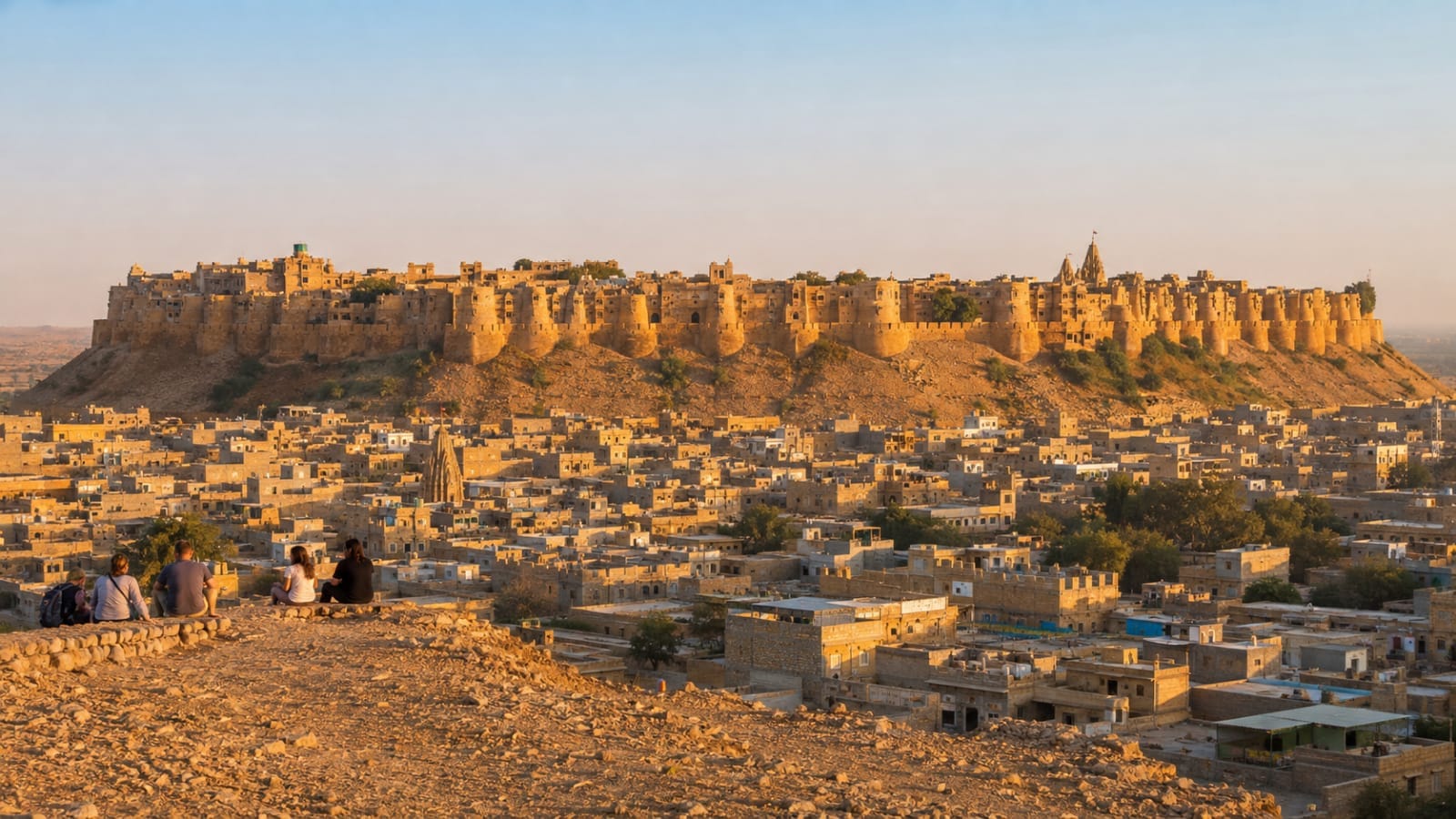
Jaisalmer is a desert city that rewards practical planning. Built in 1156 CE and rising from the Thar Desert on Trikuta Hill, its Golden Fort and surrounding havelis create a distinctive landscape.
For a first trip, the main decisions are how many days to spend, when to visit, how to balance heritage sightseeing with the desert, and how to organize transport.
What to Expect in Jaisalmer
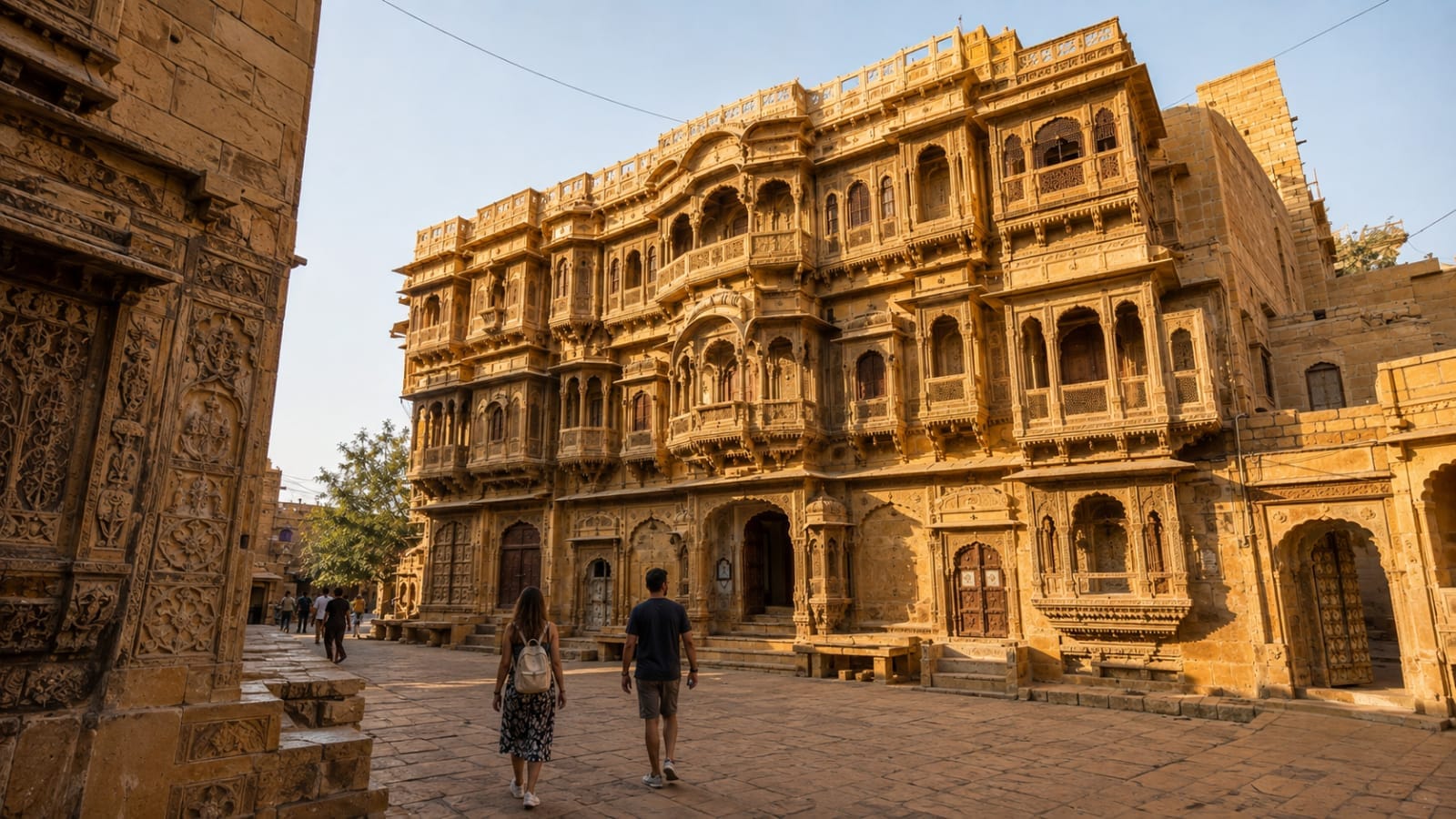
Jaisalmer is known for its living medieval fort, ornate merchant havelis carved from golden sandstone, and access to the Thar Desert. The fort remains inhabited, with narrow lanes, temples and market areas within and around its walls.
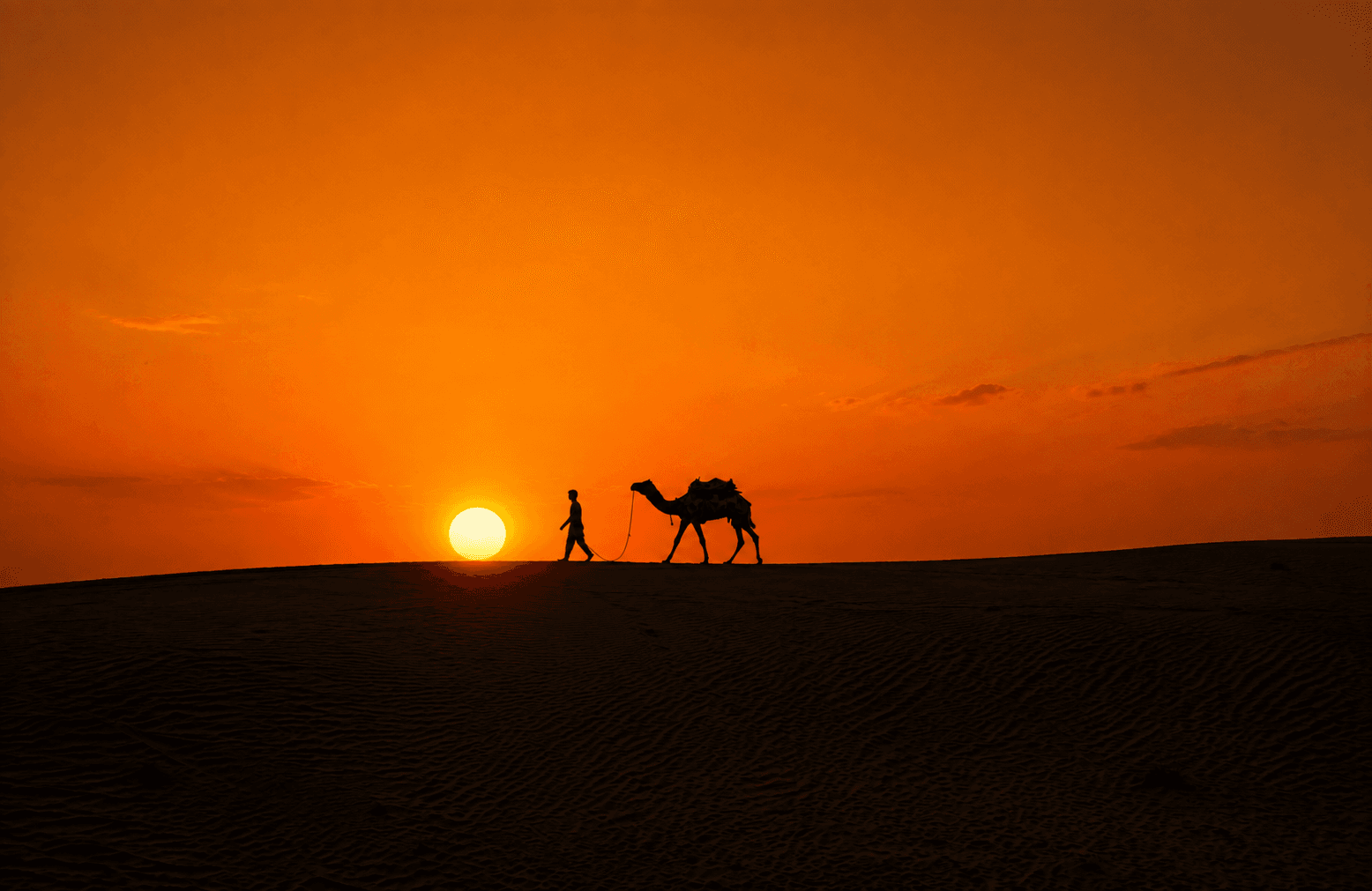
A visit usually combines three different experiences: exploring the fort and old city on foot, visiting historic havelis and temples, and choosing a desert experience such as a camel safari, jeep safari or overnight camp near Sam Sand Dunes.
How Long Should You Spend in Jaisalmer?
- Minimum time to see Jaisalmer Fort, one or two havelis and Gadisar Lake.
- The schedule can feel rushed, especially if you also try to add a desert safari.
- Best suited to travelers who are passing through and cannot stay longer.
- Explore Jaisalmer Fort, the old city and the main havelis.
- Visit Gadisar Lake and allow time for markets and slower exploration.
- Add an evening desert safari or an overnight desert camp.
- This gives a better balance between sightseeing, desert experiences and rest.
- Spend more time around the city and desert.
- Consider additional outings such as Kuldhara or Desert National Park.
- Useful if you prefer a slower itinerary rather than fitting everything into two days.
The Best Time to Visit Jaisalmer
October–March
- Generally the most comfortable season.
- Daytime temperatures in the supplied guide are around 20–28°C.
- Nights can be cool or cold.
- Good conditions for sightseeing and outdoor activities.
April–September
- April–June can be extremely hot.
- July–September brings monsoon conditions and higher humidity.
- Travel is possible, but these months are less popular.
If your trip coincides with the Jaisalmer Desert Festival in late January or February, the supplied guide recommends booking well in advance because accommodation and transport can fill quickly.
How to Reach Jaisalmer
What to Do in Jaisalmer: Key Attractions
Jaisalmer Fort
The iconic living fort dominates the city. Sunrise and sunset are highlighted in the supplied guide as especially atmospheric times to see the golden sandstone.
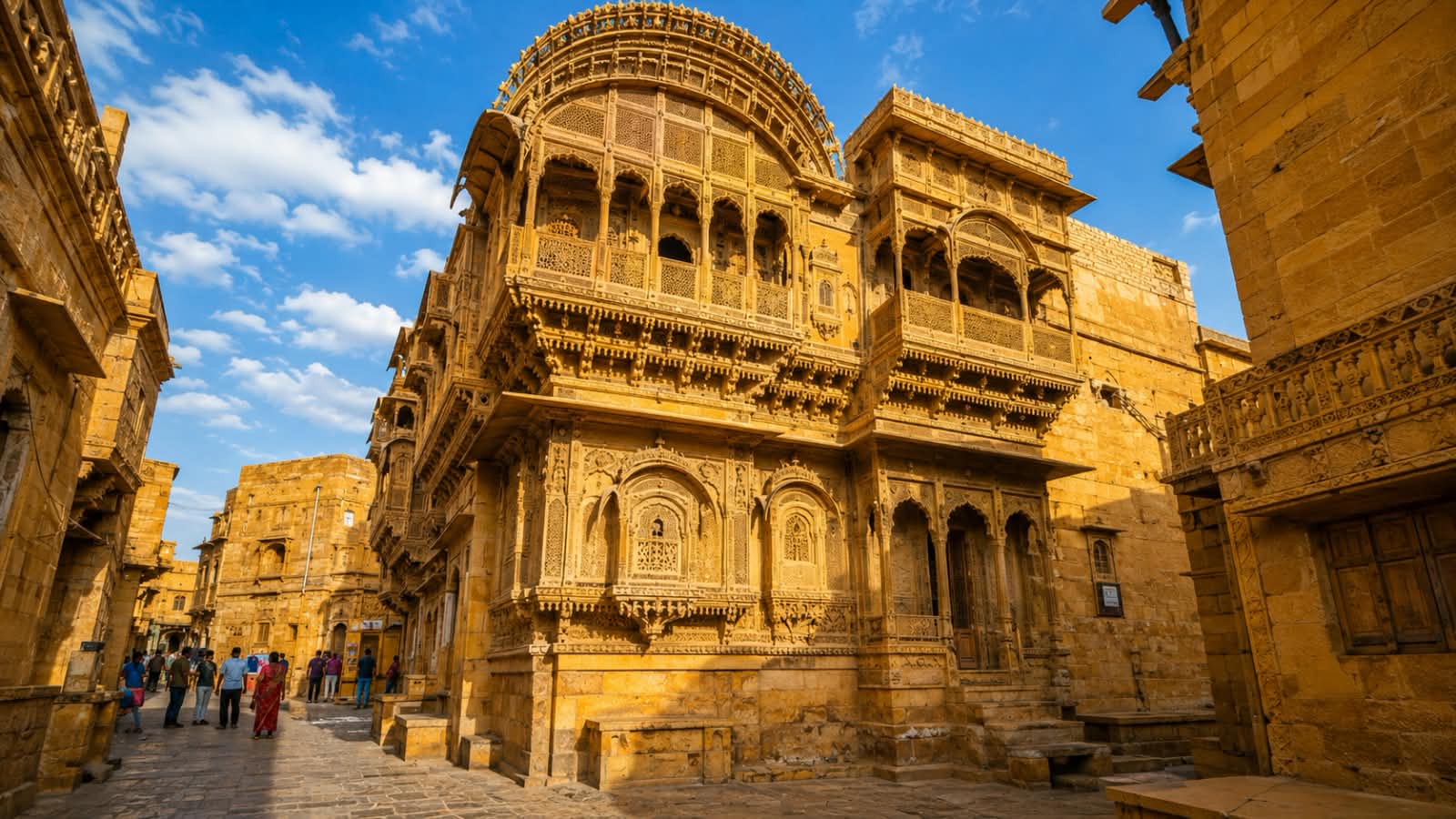
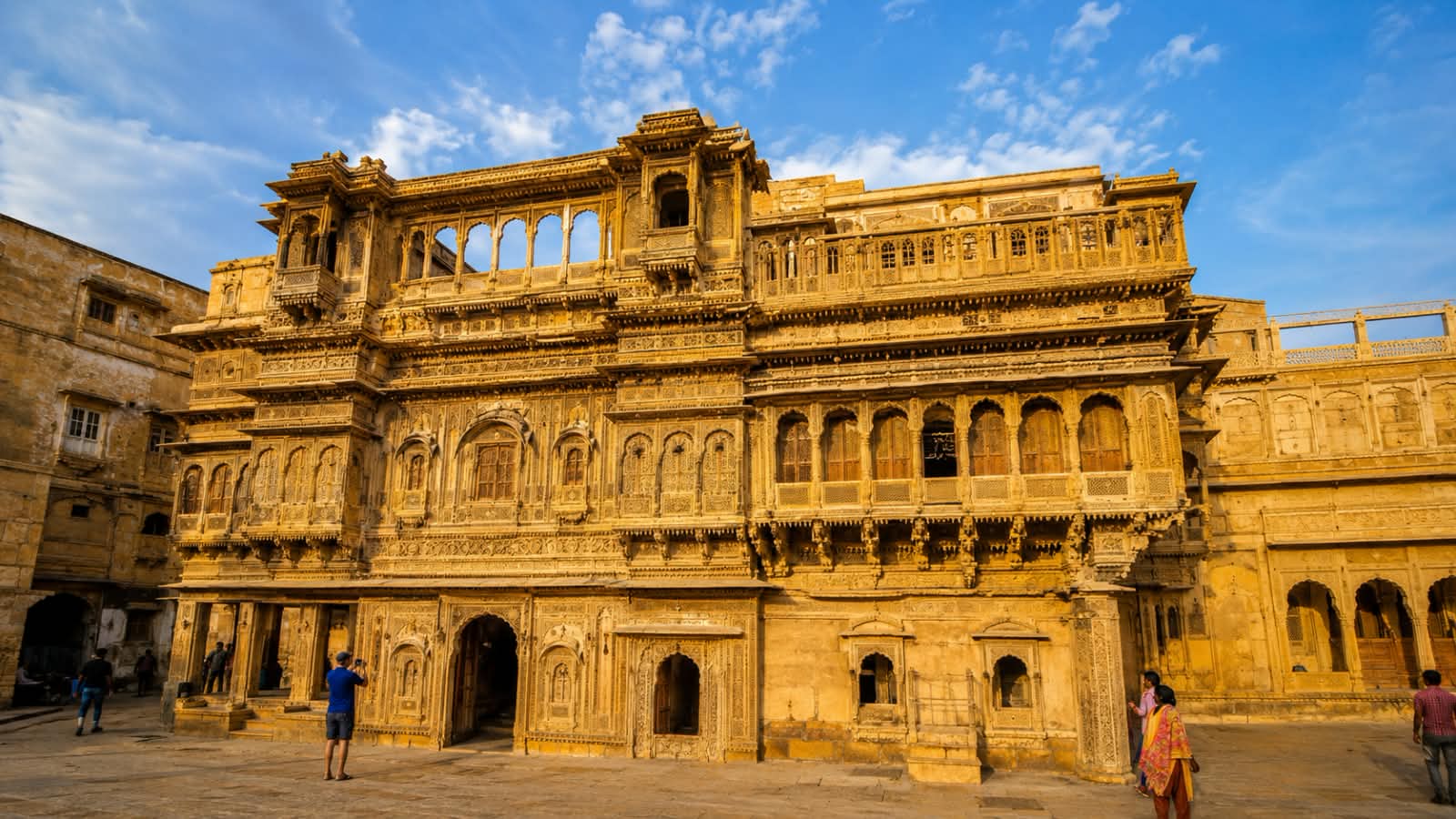
Patwon Ki Haveli
A cluster of five historic havelis and one of the city’s major heritage attractions. The guide recommends a local guide for understanding its architecture and history.
Gadisar Lake
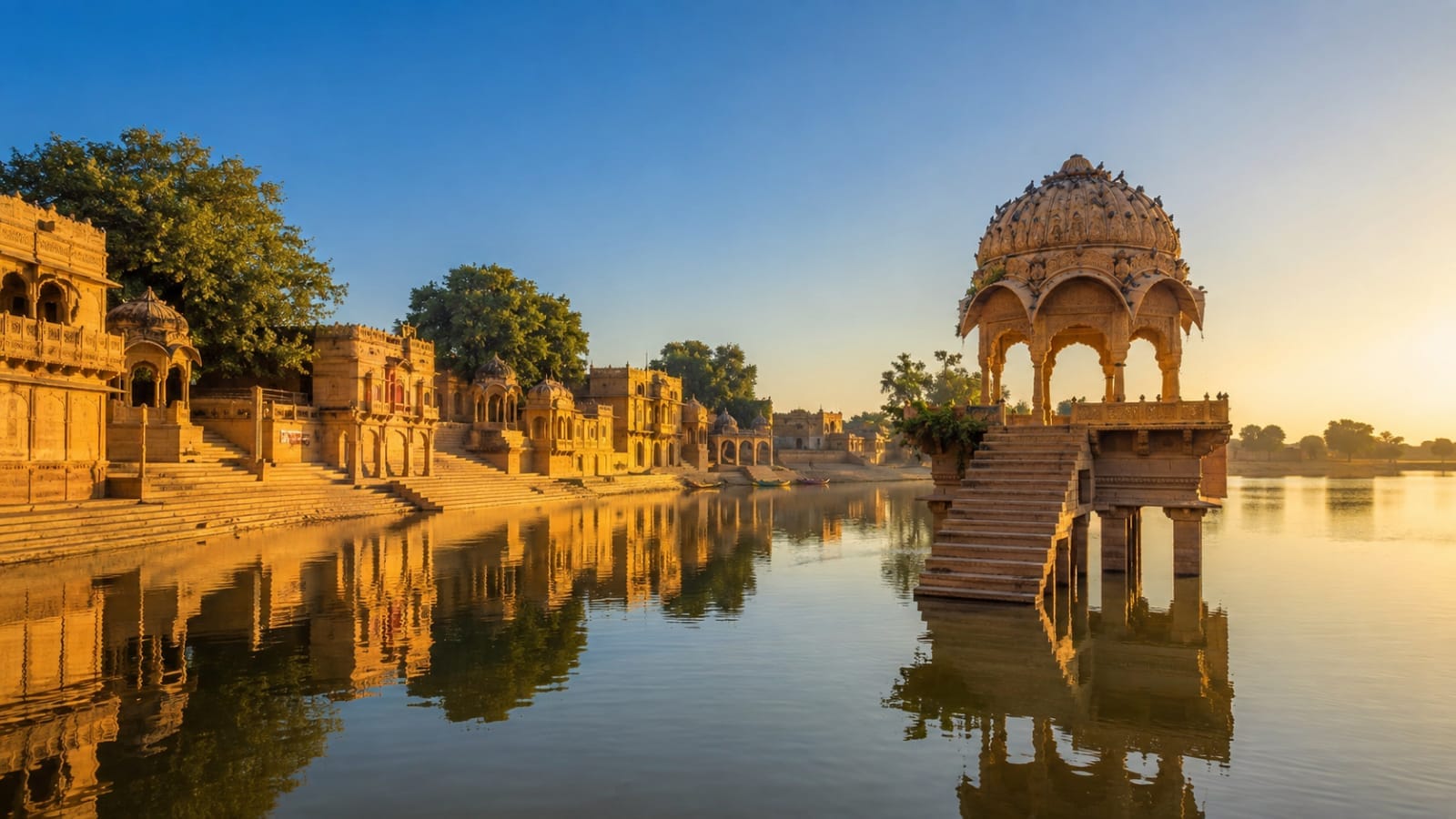
A scenic reservoir south of the fort. Early morning or late afternoon is suggested for better light and a calmer experience.
Sam Sand Dunes
Jaisalmer’s principal desert experience, with camel safaris, jeep safaris and overnight desert camps available.
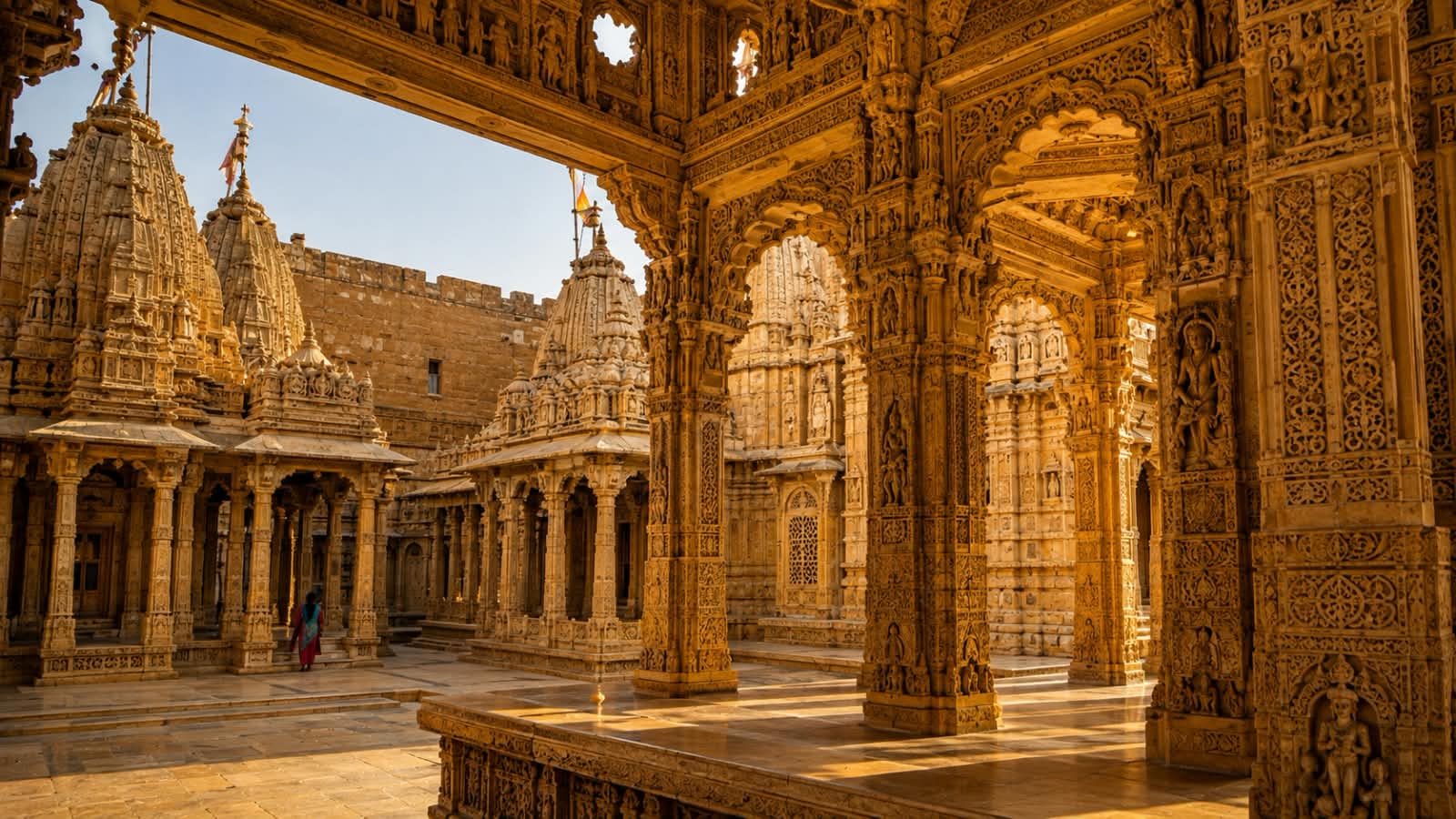
Jain Temples
Historic temples inside the fort known for detailed carvings. Visitors should respect the sacred nature of the sites.
Other Havelis
Nathmal Ki Haveli and Salim Singh Ki Haveli are also noted. Some old buildings are private homes or shops, so permission should be respected.

Planning Your Days in Jaisalmer
- Arrive and settle into your accommodation.
- Explore Jaisalmer Fort and the surrounding old city.
- Walk through the narrow lanes and explore local markets.
- Avoid the strongest midday heat and keep the pace comfortable.
- Visit Jain temples or take an early morning fort walk.
- Explore Patwon Ki Haveli and other heritage buildings.
- Rest during the hotter middle of the day.
- Visit Gadisar Lake in the late afternoon.
- Finish with an optional desert safari or overnight desert camp.
- Continue desert activities if you stayed overnight.
- Alternatively, visit Kuldhara or explore less-crowded heritage areas.
- Keep your departure flexible around train or bus schedules.
What to Pack and Practical Tips
Essential Items
- Light, breathable clothing
- Sunscreen and sunglasses
- Hat or cap
- Large water bottle
- Comfortable walking shoes
- Layers for winter nights
- Power bank
- Modest clothing for temple visits
Practical Tips
- Avoid sightseeing during the strongest midday sun.
- Pre-book taxis or arrange transport through your accommodation.
- Use bottled water and choose food carefully.
- Book desert safaris and camps ahead during peak season.
- Consider a local guide for havelis and heritage sites.
Common Mistakes to Avoid
Overpacking the itinerary
Trying to cover the fort, multiple havelis, the lake and the desert in too little time can make the trip rushed. Two to three days provides a more balanced base according to the supplied guide.
Sightseeing in the strongest heat
Plan exposed outdoor sightseeing around the cooler parts of the day and carry water and sun protection.
Assuming every historic building is public
Some havelis and old buildings are private homes or businesses. Respect signs and ask before entering.
Leaving desert arrangements until the last minute
During October–March, advance planning is useful. Confirm what is included in your safari or camp before paying.
Forgetting charging needs
Remote desert camps may have limited electricity, so carrying a charged power bank is practical.
Heritage. Desert. Culture.
A Jaisalmer trip works best when you leave room for both sightseeing and the desert. Use the city for heritage and architecture, then slow down for the Thar Desert experience.
Frequently Asked Questions
It is particularly suited to travelers interested in history, desert landscapes and architecture. The supplied guide notes that it is less suited to travelers primarily looking for beaches, adventure sports or urban nightlife.
One day is possible but rushed. Two to three days is presented as the most balanced option for a first visit, while four or more days allow additional day trips and slower exploration.
October to March is identified in the supplied guide as the most comfortable period for sightseeing and outdoor activities.
The supplied guide describes camel safaris as slower and more immersive, while jeep safaris cover more distance and suit travelers looking for a faster-paced experience.
The guide describes the fort, havelis and Gadisar Lake as family-friendly. It also recommends considering the narrow lanes when traveling with young children.
The supplied guide says urban Jaisalmer generally has 4G and hotel or restaurant Wi-Fi, while remote desert camps may have weaker connectivity.
Planning a Jaisalmer Trip?
Have questions about sightseeing, desert experiences, transportation or building a multi-day itinerary? Contact Kunsh Trips to discuss your plans.
Contact Us